
After selecting a photograph to copy, I took a sheet of A3 cartridge paper coloured pencils and watercolour pencils. I wanted to show the depth in the picture with the different use of this media.
Saturday, 17 December 2011

Drawing Cloud Formations

These media could be shaded or used with hard lines.
I did a small scale drawing which included a sketch of a few buildings in an attempt to feel the whole picture, then added the blue sky with the clouds as a negative. Pale blue shading was added last which gave the tonal shades to the clouds. This was my favourite of all the tested techniques I attempted.
 The blue studies in oil pastels were easy to give a varied contrast to but did not give a realistic interpretation of the clouds, although it could be a very useful approach in some situations.
My biggest obstacle with this exercise was that the daylight hours I was able to spend time on these studies the skies were a thick blanket of rain cloud with no variation to the tones what so ever.
Wednesday, 9 November 2011
Research Point - Lorrain and Turner
I had to look at the work of Claude Lorrain and Turner. Then write notes on how those artists divide their landscapes into the foreground, middle ground and background.

Lorrain never worked on any other subject other than landscapes. He separated his paintings with very clear areas. The foreground in the above picture looks almost as if it could be a frame made from bold intricate figures, animals, tress, shrubs and pillars. The eye is drawn through this frame work to the middle ground of more tress and a church/building. This section is drawn with less detail and is much lighter in colour. The background in the distance is so faded that it is nearly nonexistent show only a representation of what could be far away.
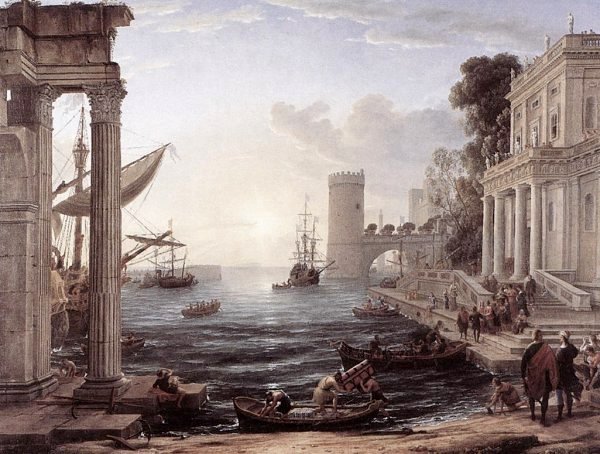
Simular to the above drawing, this painting has the same typical structure. The people, boat and the few selected items in the foreground have been awarded the most time and detail to give them a bold look. The mid ground of people, buildings and boats a little lighter and the background faded showing very little in detail almost looking unfinished.
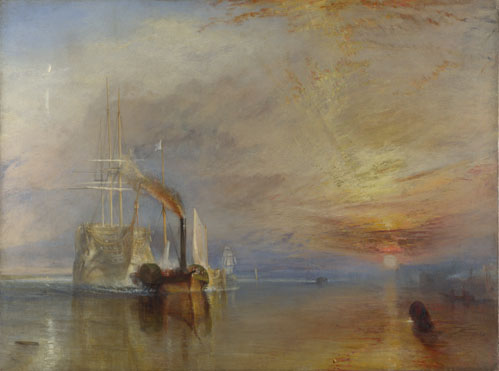
Turner separates his landscapes in the same way as Lorrain. The foreground water with great detail, the ship closest to the viewer is the clearest and richest in colour, the mid section still showing some of the detail of the ships and the background a wish wash of muted colours.
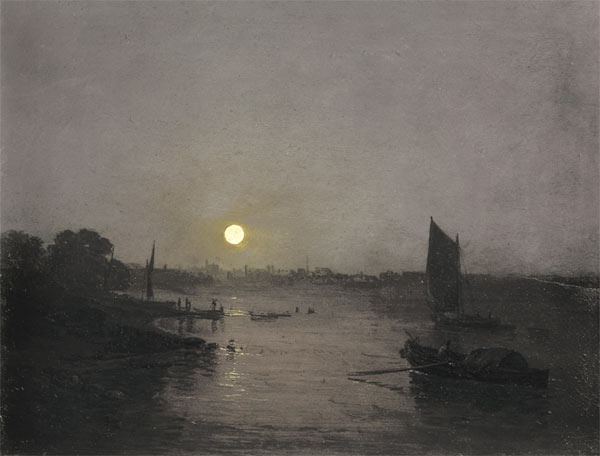
In this Turner masterpiece, he has shown more detail in the mid section of ships, the foreground has lesser detail as it is in darkness and the background more light with the moon shinning down on the hazy detail of the ships and land in the distance.
Lorrain never worked on any other subject other than landscapes. He separated his paintings with very clear areas. The foreground in the above picture looks almost as if it could be a frame made from bold intricate figures, animals, tress, shrubs and pillars. The eye is drawn through this frame work to the middle ground of more tress and a church/building. This section is drawn with less detail and is much lighter in colour. The background in the distance is so faded that it is nearly nonexistent show only a representation of what could be far away.
Simular to the above drawing, this painting has the same typical structure. The people, boat and the few selected items in the foreground have been awarded the most time and detail to give them a bold look. The mid ground of people, buildings and boats a little lighter and the background faded showing very little in detail almost looking unfinished.
Turner separates his landscapes in the same way as Lorrain. The foreground water with great detail, the ship closest to the viewer is the clearest and richest in colour, the mid section still showing some of the detail of the ships and the background a wish wash of muted colours.
In this Turner masterpiece, he has shown more detail in the mid section of ships, the foreground has lesser detail as it is in darkness and the background more light with the moon shinning down on the hazy detail of the ships and land in the distance.
Research Point - Pentimenti
Mistakes in master drawings are known as pentimenti. Drawings are often more valuable if they contain pentimenti. I needed to find out about pentimenti and restatements and find examples of them in famous drawings and log my findings.
 |
| The Old Guitarist |
Looking for at pentimenti I found quite a few examples of famous artists work which has been over painted to reuse the canvas but very little work showing these mistakes which have been overworked and revealed via x-ray in ghost like images.
I found a good example on Wikipedia of this, The Old Guitarist by Picasso. Although this total over work when the artist has changed his mind about subject it is not commonly known as pentimenti but as a restatement.
 |
In this painting by Ferdinand Bol, when he over painted his figures they would have been hidden my the new layer of paint. Over the years these figures have started to show through which is quite common with age. It is very clear that Ferdinand moved the composition around until he was happen with the position of his figures.
 |
| Views of Paestum |
This picture shows red markings which were the correction. It can safely be assume that Piranesi sketched this in 1778 and intended to use this as preparatory studies for a series of etchings.
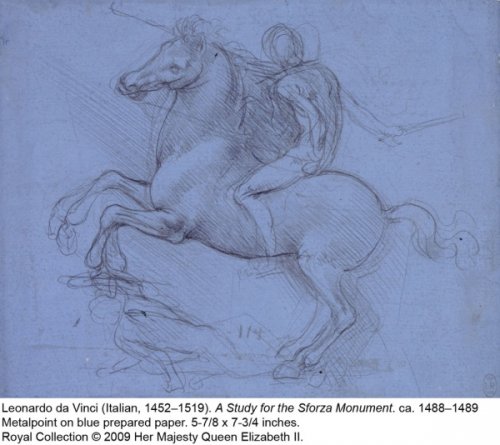
Leonado Da Vinci is famous for his preliminary sketches which more often than not have pentimenti within them.
In all my studies in art, I have been advised not to use a rubber but to leave any mistakes and over work them. Also pentimenti although I'm not yet a famous artist.
Monday, 7 November 2011
360 Degree Studies

I found this lesson very valuable.
The course book said to find a space where the view is unrestricted. Having had a lot of time wasted whilst I was trying to find my mojo again, I wanted to get on with the course. Time was short this week so I took a long lunch from my office desk and drew the local market square.
I did not know if this would work believing that I would be drawing market stalls and people in every direction, how wrong was I.


Every inch of every view showed a different thing to draw either in the foreground or the background. I found myself looking at the buildings behind the market and the details in their architecture I had never taken any notice of before.

A Sketchbook Walk


For my sketchbook walk I visited my local park.
The top sketch is an area which separates the open gardens and the animal petting area. With the sun sinning from the left the shadows were quite deep on the right hand side of the wall through the centre of the page. What attracted me to draw this area was the way the watering can was rested at an angle and the reflections on the dogs drinking bowl from the tap above. I worked only a few feet from the edge of the wall.
The next picture is of the closed cafe about 30 to 40 feet away from me. It was quite dark and mostly in the shade. I do think I could have been a little more generous with my pencil to show this darkness.


The first the sketch is of a pathway over a small bridge the day was overcast and being near a large will tree everything was dark. The dense shrubbery looked easy to draw until I started trying to capture the details. The foreground was very close and in shadow. The mid section was in good light and the background dark again. I took the longest time over this picture only stopping after about 20 minutes or maybe a bit longer.
The last sketch looking over the pond with some rocks in the center. Shaded areas all over due to the large trees.
Landscape Drawing - Research Point - Looking at Artists
Looking at and researching different artists showed many styles to depict the landscape. The course material recommended that artists such as Durer, Lorrain and Lowry's works were used as examples.
 |
| Albrecht Durer (1471-1528) The Pond in The Woods (1496) http://en.wikipedia.org/wiki/File:Albrecht_D%C3%BCrer_-_Pond_in_the_Woods_-_WGA07358.jpg |

Durer was one of the first artists to realise the potential of watercolour paints. A German painter, possibly one of the greatest artists of Northern Renaissance.
In the above painting, The Pond in The Woods, Durer has shown explicit detail on the grass in the foreground. Other areas are left looking unfurnished. He creates a depth to the water by using the changes to the colour from a deep blue to a brown.
 |
| Laurence Stephen Lowry (1887-1976) http://menmedia.co.uk/manchestereveningnews Industrial Landscape (1958) |
Famous for his simplistic stylisation of poeple Lowry painted the working class within an urban landscape. Great care was used in the architectural detail but very little to show any weather conditions such as cloud or sun. This does however allow him to show the smog in his "Indrustrial Landscape" above which sold for £602,400 in June 2007.
Gerald Coulson is an Emglish self taught artist who has been producing pieses of work for over 30 years. He is known for his milarty aircraft pictures with moody backgrounds and colourful skies. I was drawn to this piece of art due to the stillness and as the title the calm warm colour of the yellow sun.
Another English landscape artist. He is currently living in USA and working in a huge workshop which suits his very large scale pieces of art. The Royal Academy of Art hang Hockney's largest painting 'Bigger Trees Near Water' which measures 15 x 40 feet. All his work is big bold and bright.
| Gerald Coulson http://www.buy-fineart.com/ Evening Calm |
 |
| David Hockney (1937) http://www.hockneypictures.com/ A Bigger Grand Canyon |
Subscribe to:
Posts (Atom)